Request A Free Quote

Please enable JavaScript in your browser to complete this form.

When One Lost Fishing Net Can Cost Thousands: Why Offshore Fleets Are Switching to Solar AIS BUOYS 888

In offshore fishing, the real cost is often not fuel, labor, or even equipment. It’s the fishing gear that disappears silently in rough seas. One drifting net can mean thousands of dollars lost overnight, wasted hours searching in bad weather, damaged operations, and sometimes even regulatory trouble when abandoned “ghost gear” continues floating at sea. Across commercial fishing fleets, one issue keeps coming up repeatedly: traditional marker buoys are no longer enough for modern offshore operations. Fishermen are dealing with stronger currents, wider fishing zones, night operations, unpredictable weather, and increasing pressure to improve operational visibility. That is exactly why more professional fleets are moving toward Solar AIS BUOYS systems, especially intelligent long-range tracking models like the 888.

The biggest misconception about fishing net tracking is that visibility is the primary problem. It isn’t. The real problem is recoverability. Many conventional buoys can still be visually spotted during daytime under ideal conditions, but offshore fishing rarely operates under ideal conditions. Heavy fog, rain, strong swells, nighttime deployment, and long-distance drift can make visual retrieval nearly impossible. Once a net drifts outside the expected position, crews often spend hours burning fuel while scanning the sea blindly. In severe cases, the net is simply abandoned because the retrieval cost becomes higher than the gear itself. This is one reason ghost fishing gear has become a growing global marine problem. Research and industry reports continue highlighting how lost fishing equipment damages marine ecosystems while creating major economic losses for commercial fleets.Panbo

What makes this problem worse is that many traditional tracking solutions fail precisely when fishermen need them most. Battery-powered tracking buoys frequently lose transmission offshore because of power limitations, saltwater corrosion, antenna instability, or harsh weather exposure. Real offshore users repeatedly mention the same frustration: once the buoy stops transmitting, the fishing gear essentially disappears.Reddit This pain point becomes critical during multi-day fishing operations where crews cannot constantly recharge or maintain equipment. Offshore fishing is already physically exhausting. Nobody wants to troubleshoot electronics in rough seas at 3 AM.

This is where the Solar AIS BUOYS 888 changes the operational equation.

Instead of functioning as a simple floating marker, the 888 is designed as a continuous offshore tracking system built specifically for commercial fishing environments. The most important advantage is not just AIS visibility — it is persistence. Solar-powered operation dramatically reduces the anxiety of signal interruption during long deployments. Rather than depending entirely on limited battery reserves, the buoy continuously replenishes power under sunlight, allowing stable offshore operation over extended periods. For fishing crews working multi-day or long-range routes, this changes daily workflow entirely. Instead of constantly worrying whether the buoy still has power, crews can focus on actual fishing efficiency.

The “888” model positioning is especially attractive because it solves multiple offshore pain points simultaneously instead of addressing only one. First, the AIS transmission allows nearby vessels and fleet operators to identify buoy positions more effectively during low-visibility operations. This directly reduces accidental net collisions and improves navigation awareness in crowded fishing zones. Industry discussions around AIS fishing buoys repeatedly emphasize how proper AIS integration improves operational safety and gear recovery efficiency.Panbo Second, the solar-powered structure significantly lowers maintenance frequency compared with older battery-only systems. For fleet managers operating multiple fishing grounds, maintenance reduction alone creates major long-term cost savings.

Another overlooked issue in offshore fishing is psychological pressure. Most fishing operators won’t openly discuss it, but every offshore deployment creates uncertainty. Once expensive gear disappears into rough water, crews immediately start calculating potential losses in their heads. Was the current stronger than expected? Did another vessel cross the area? Did the buoy drift? Is the signal still active? Modern fishing operations increasingly rely on data visibility because uncertainty directly reduces operational confidence. A Solar AIS BUOYS system like the 888 gives operators something extremely valuable offshore: reassurance. Knowing the gear remains trackable fundamentally changes decision-making during difficult conditions.

There is also a commercial reality many suppliers ignore. Today’s fishing companies are under growing pressure from regulators, insurers, and environmental agencies regarding gear accountability. Lost nets are no longer viewed as “normal operational waste.” Ghost fishing gear has become a globally recognized environmental issue, with increasing scrutiny on fleet management and retrieval responsibility. sciencedirect Smart AIS buoy systems help commercial fleets demonstrate stronger operational control and responsible fishing practices. This becomes increasingly important for export-oriented fisheries and industrial operators working under international compliance standards.

From a buyer’s perspective, the purchasing decision is not really about buying another buoy. It is about reducing operational uncertainty. Offshore fleets calculate equipment value differently from recreational users. They care about downtime, recovery efficiency, deployment reliability, weather resistance, transmission stability, and long-term maintenance cost. A cheap buoy that fails offshore is far more expensive than a premium buoy that continues transmitting reliably in difficult conditions. This is precisely why high-end Solar AIS BUOYS products are gaining attention globally.

The 888 model also aligns with a broader shift happening in commercial marine technology. Fishing fleets are becoming more data-oriented and automation-driven. AIS systems, GPS integration, intelligent navigation tools, and remote tracking are no longer considered luxury upgrades. They are becoming operational necessities in competitive offshore fisheries. NOAA and international marine authorities continue emphasizing the growing role of AIS-based visibility and tracking systems across global fishing operations. NOAA fisheries In this environment, using outdated marker systems increasingly feels like operating modern logistics with paper maps.
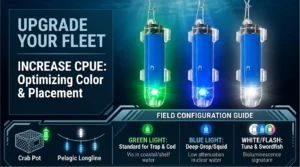

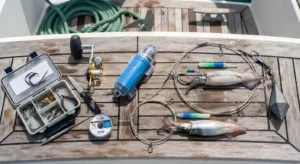
What makes the Solar AIS BUOYS 888 particularly compelling is that it speaks directly to the emotional and financial pain points of real offshore fishermen. It reduces the fear of losing expensive gear. It lowers retrieval time. It minimizes unnecessary fuel consumption during search operations. It improves visibility during night deployment. It decreases maintenance interruptions. Most importantly, it allows crews to operate with greater confidence in difficult offshore conditions.

And confidence offshore is not a luxury. It is operational survival.

For commercial fishing companies looking to modernize offshore net tracking while reducing long-term operational losses, the 888 is not simply another marine accessory. It is an investment in recoverability, visibility, and operational control — three factors that increasingly determine profitability in modern offshore fishing.

Leave a Reply

Your email address will not be published. Required fields are marked *