Understanding the difference between jig hooks and circle hooks is essential for any angler looking to improve hook-up rates, bait presentation, and overall fishing efficiency. While both hook types are widely used in freshwater and saltwater fishing, they serve completely different purposes and fishing styles.
In this guide, we’ll break down jig hooks vs circle hooks, explain when to use each, and share proven jig fishing techniques, setups, and real-world applications to help you catch more fish in different conditions.
What Are Jig Hooks?
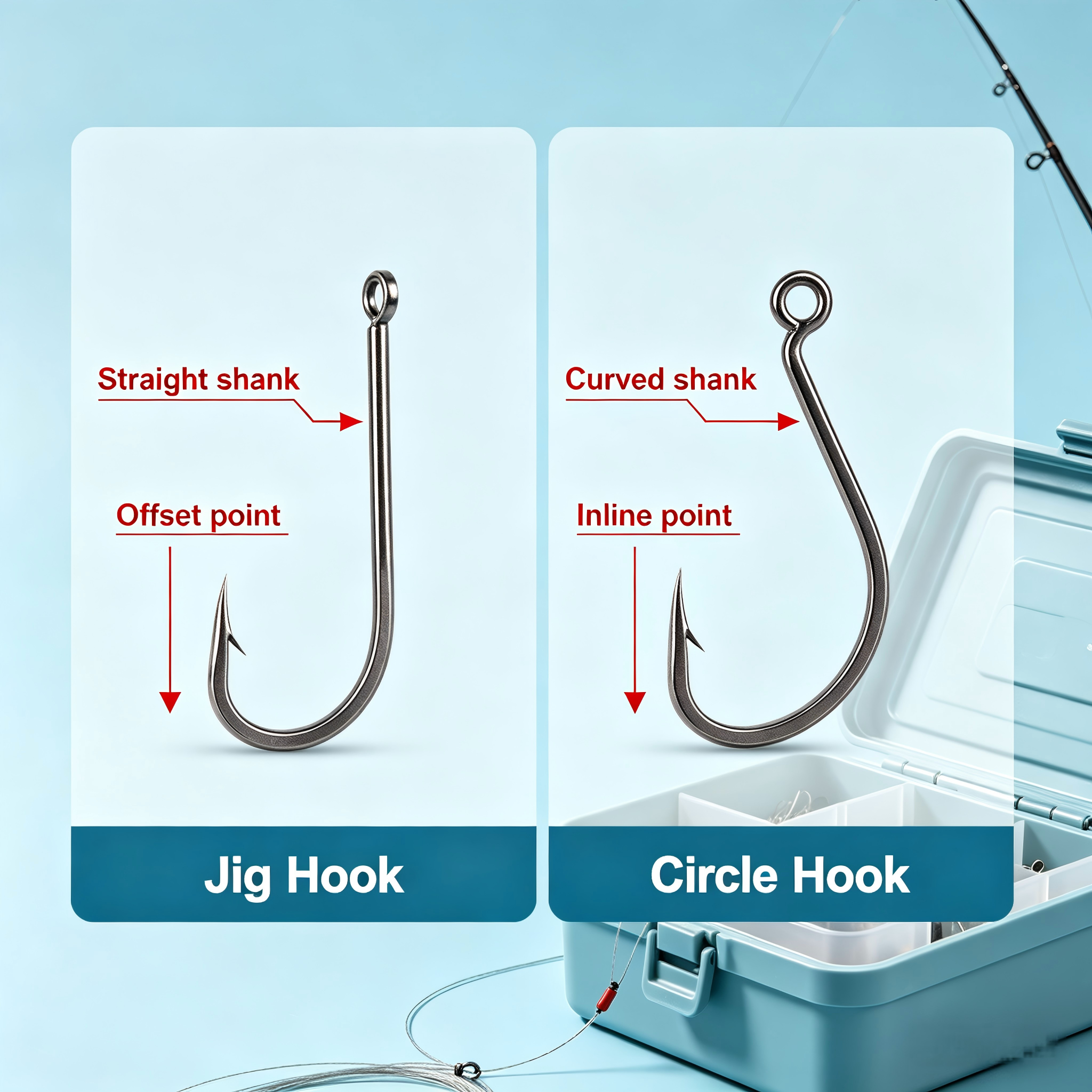
Jig hooks are hooks integrated with or paired with a weighted jig head. This design allows anglers to combine weight and hook into one compact fishing tool, making it ideal for active lure fishing.
Unlike passive hook systems, jig hooks are designed for movement-based fishing techniques where the angler controls lure action.
Key characteristics of jig hooks:
- Weighted head for casting and sinking
- Exposed hook point for fast penetration
- Designed for soft plastic lures and swimbaits
- Ideal for active retrieval techniques
Jig hooks are widely used in bass fishing, inshore fishing, and offshore structure fishing, where anglers need precision and control over lure behavior.
A highly effective setup for natural swimming action is:
Fish Eye Swimbait Jighead for Fishing Inshore Offshore
This type of jig head is ideal for mimicking baitfish in both coastal and offshore environments.
What Are Circle Hooks?
Circle hooks are designed for passive fishing techniques where the fish hooks itself as it swims away with the bait. The unique circular shape helps the hook slide into the corner of the fish’s mouth instead of deep hooking.
Key characteristics of circle hooks:
- Self-setting hook mechanism
- Minimal gut-hooking risk
- Best for live bait or cut bait fishing
- Common in catfish and saltwater bait fishing
Circle hooks are especially popular in catch-and-release fishing because they significantly reduce injury to fish.
Jig Hooks vs Circle Hooks: Key Differences
| Feature | Jig Hooks | Circle Hooks |
|---|---|---|
| Fishing style | Active lure fishing | Passive bait fishing |
| Hook set method | Fast, aggressive hook set | No hook set needed |
| Best bait type | Soft plastics, swimbaits | Live bait, cut bait |
| Control level | High control over movement | Minimal control |
| Best environments | Structure, grass, rocks | Open water, bait fishing |
Best Jig Fishing Techniques (Proven Methods)
Jig hooks are extremely versatile and can be used in multiple fishing styles depending on water depth, structure, and fish behavior.
1. Vertical Jigging (Deep Water Fishing)
Drop the jig straight down and use short upward rod movements to create an up-and-down motion that imitates injured baitfish.
This method is highly effective in offshore fishing and deep structure targeting.
2. Bottom Hopping (Structure Fishing)
Let the jig sink to the bottom, then lift and drop it in short intervals to mimic crawfish or bottom bait movement.
This technique is especially effective for bass and bottom feeders in rocky or sandy environments.
3. Swim Jigging (Search Technique)
A steady retrieve through the water column allows the jig to mimic a fleeing baitfish.
For improved bait stability and hook performance, anglers often use:
Swimbait Jig Heads with Stacked Cone Keeper
This design helps secure soft plastics and maintain a natural swimming motion during retrieval.
Night Fishing and Low-Light Advantage
In low-visibility conditions such as night fishing or murky water, visibility and vibration become critical.
A glow-enhanced jig setup can significantly improve strike rates:
Night Glowing Lead Head Jig Hook
Glow jig heads attract fish in deep or dark environments and are widely used for offshore and catfish fishing.
When to Use Jig Hooks vs Circle Hooks
Use Jig Hooks when:
- Actively searching for fish
- Fishing around structure (grass, rocks, timber)
- Using soft plastics or swimbaits
- Performing casting or jigging techniques
Use Circle Hooks when:
- Fishing with live or cut bait
- Targeting fish in open water
- Practicing catch-and-release fishing
- Reducing deep hooking risk
Why Jig Hooks Are Essential in Modern Fishing
Jig hooks are one of the most effective tools in modern lure-based fishing systems. Their ability to combine weight, hook, and bait control makes them ideal for:
- Bass fishing
- Inshore saltwater fishing
- Offshore structure fishing
- Search-style predator fishing
Unlike traditional bait hooks, jig hooks allow anglers to actively “control the strike zone,” making them a preferred choice for experienced fishermen.
Final Thoughts
The debate between jig hooks vs circle hooks is not about which one is better overall—it’s about choosing the right tool for the right fishing situation.
If you need control, movement, and active lure presentation, jig hooks are the superior choice. If you prefer passive bait fishing with minimal effort, circle hooks are more suitable.
For anglers looking to upgrade their jig fishing performance, using high-quality jig heads and properly matched soft plastics can significantly improve success rates.