
Light is a standard consideration in many swordfish longline operations. A pelagic longline consists of a mainline, branch lines and baited hooks, and light-emitting devices are often attached to the branch line to create a visible point near the bait.
The NOAA Fisheries guide to pelagic longlines identifies swordfish as a target species and notes that lightsticks are often used when targeting particular species. It also explains that longline sets may soak for hours and can be suspended at different depths. This makes light type, attachment security, operating mode and service life practical equipment decisions rather than cosmetic choices.
Why Are Lights Used in Swordfishing?
A fishing light creates a visible signal in dark water. It may help swordfish locate the bait directly or attract organisms that form part of the surrounding food chain. The exact response can vary with region, water conditions, deployment depth and fishing method, so no light should be treated as a guaranteed catch solution.
Research published in Fisheries Research compared light attractor colors in pelagic longline fisheries, confirming that color is a relevant variable for both target catch and selectivity. An earlier study also evaluated light-sticks and electric light attractors in swordfish longline catches. These studies support testing lights as part of a controlled fishing strategy rather than relying on a single universal configuration.
The Main Factors When Choosing a Swordfish Light
1. Light type
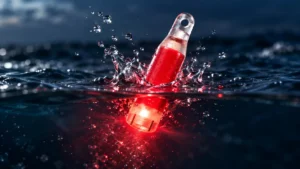
Common options include chemical lightsticks, disposable LED lights and reusable battery-powered lights. Chemical sticks are simple but single-use. Reusable lights may reduce the number of discarded units but require retrieval, checking and maintenance. A compact disposable LED light can be useful when a crew wants consistent electrical illumination without charging or battery replacement between sets.
The XC188 disposable underwater fishing light is positioned for straightforward deployment in demanding fishing operations. Buyers can also review the dedicated XC188 product page for ordering and product-specific information.
2. Color
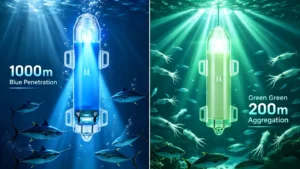
Green, blue, white and other colors are used in different fisheries. Water clarity, depth, background light and target behavior can all affect visibility. Instead of claiming that one color is always best, commercial operators should compare colors over repeated sets while recording location, soak time, depth, bait and catch.
3. Flashing or steady output
Flashing mode reduces the LED duty cycle and can extend working life. Steady mode provides uninterrupted light but consumes energy faster. For XC188, the steady-on configuration can provide approximately 1,000 hours of continuous operation, while flashing mode can exceed 4,000 hours under the specified configuration.
Read the detailed comparison in Flashing vs Steady Fishing Lights.
4. Attachment and placement
The light must be secured without interfering with the bait, hook, leader or normal handling of the branch line. Historical and official gear references show that practices differ. A NOAA technical description of Hawaii swordfish longline gear reports buoyant lightsticks positioned approximately two to three meters from the hook, while other fisheries use different spacing. Always follow the applicable fishery rules and the vessel’s proven rigging procedure.
5. Water activation
A water-activated light simplifies deck handling because it turns on after water contact. It also helps avoid wasting operating time before deployment. The contact points should be kept clean and dry during storage and checked before each set.
6. Battery life and operational cost
The lowest unit price is not always the lowest cost per set. Compare operating hours, light mode, expected soak time, failure rate, handling time and replacement frequency. For longline fleets, consistent supply and batch quality can be as important as maximum theoretical runtime.
Choosing Between Disposable and Battery-Powered Lights
Choose disposable LED fishing lights when simple deployment, low maintenance and compact storage are priorities. Consider battery-powered fishing lights when the crew can reliably retrieve, inspect and reuse the units.
For broader selection, compare all underwater fishing lights and the dedicated deep drop fishing light range.
Responsible Use
Light use is regulated differently across fisheries. NOAA notes that lightsticks may also attract protected species, including sea turtles, in pelagic longline fisheries. Operators must follow local rules covering gear type, hook configuration, protected-species measures and disposal. Never discard used lights or plastic components at sea.
Conclusion
An effective swordfish lighting plan balances visibility, placement, service life, handling and compliance. XC188 gives commercial buyers a compact disposable LED option with a choice between long flashing operation and steady illumination. The best configuration should be established through controlled trials and accurate catch records.
Explore the XC188 disposable underwater fishing light or contact Sikes through the XC188 product page for wholesale requirements.
[…] What Is the Best Light Color for Swordfish? […]
[…] buoyant luminescent lightsticks positioned approximately two to three meters from the hook in one swordfish configuration. Other documented fisheries use different distances, so this figure should be treated […]
[…] longline crews, automatic activation can reduce manual switching and prevent operating time from being […]
[…] alone does not determine fishing performance. Color, depth, placement, bait, battery life, water clarity and local fish behavior also […]
[…] Fishing light battery life affects product cost, deck preparation and the reliability of each fishing set. However, a large runtime number does not tell the full story. Buyers also need to know the light mode, test conditions, storage requirements and expected brightness over time. […]
[…] Commercial longline and deep-drop buyers need more than a bright sample. A suitable product must deliver consistent activation, secure sealing, predictable runtime and repeatable quality across bulk orders. […]