How AIS Fishing Net Trackers Are Helping Commercial Fleets Meet Global Sustainability Standards
In 2026, sustainability is no longer a marketing buzzword for the commercial fishing industry — it is a compliance requirement. The European Union’s revised Common Fisheries Policy, combined with new U.S. NOAA guidelines on ghost gear reduction, means fleet operators now face strict reporting on lost or abandoned fishing equipment. For distributors and fleet managers, the question is no longer “Should we track our nets?” but “Which AIS buoys can keep us compliant while protecting margins?”
The Ghost Gear Problem Is a Business Problem
According to the FAO, over 600,000 tons of fishing gear are lost or discarded in the ocean every year. This “ghost gear” continues catching fish indiscriminately, damaging marine ecosystems and threatening fish stocks. Regulators in Europe, North America and Japan are now requiring documented proof of gear recovery efforts. For commercial fleets, losing a single gillnet or longline set can mean:
- Direct equipment replacement costs of $500–$5,000 per net
- Fines for non-compliance with local marine protection zones
- Loss of sustainability certifications (MSC, Friend of the Sea) that premium buyers demand
How AIS Fishing Net Tracking Buoys Solve This
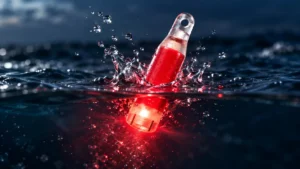
Unlike traditional marker buoys that rely solely on visual identification, modern AIS fishing net tracking buoys transmit real-time position data over the Automatic Identification System protocol. This means:
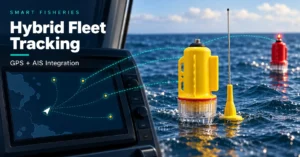
- Real-time visibility: Fleet managers see exactly where every net is deployed, directly on their vessel’s AIS receiver or fleet dashboard.
- Immediate drift alerts: If a net breaks free due to currents or vessel traffic, the marine GPS tracking device integrated into the buoy reports its new position instantly.
- Recovery documentation: Position logs provide timestamped proof of retrieval for sustainability auditors.
What to Look for in a Sustainable Fleet Tracking Partner
Not all marine GPS locators are built for the harsh realities of commercial fishing. For fleets operating in salt-spray, submersion and temperature extremes, hardware durability is non-negotiable. Sikes manufactures AIS buoys with IPX7 and IPX8 waterproof ratings, ensuring continuous transmission even after temporary submersion during net retrieval.
Key specifications sustainability-focused fleets should prioritize:
| Feature | Why It Matters for Sustainability |
|---|---|
| IPX7/IPX8 Waterproof | Ensures buoys survive rough seas without becoming marine litter themselves |
| 10–25 NM Transmission Range | Allows tracking across large fishing grounds without signal loss |
| 20–40 Day Battery Life | Covers extended voyages; solar options eliminate battery waste |
| Gillnet Mode Extension | +5–6 days battery life for drift net operations, reducing replacement frequency |
The Solar Advantage: Zero-Battery-Waste Operations
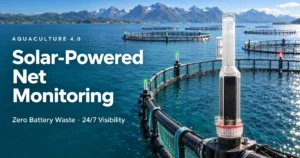
For fleets seeking to minimize their environmental footprint beyond gear recovery, solar-powered AIS buoys represent a significant operational shift. By eliminating disposable battery replacements, solar models like the Sikes 666 and 888 remove a recurring source of chemical waste from fleet operations while providing unlimited autonomy for permanent aquaculture installations.
Conclusion: Compliance as Competitive Advantage
Regulatory pressure on ghost gear will only intensify. Fleets that invest in reliable AIS fishing net tracking buoys today are not just avoiding fines — they are securing premium buyer contracts, reducing insurance premiums and building the data infrastructure for future smart fisheries certification.
Ready to equip your fleet for sustainable operations? Contact Sikes to discuss bulk pricing on IPX8-rated AIS buoys with gillnet-optimized battery modes.