Introduction
In modern angling practices, rig configuration plays a decisive role in determining fishing efficiency. While traditional single-hook rigs remain widely used, they often present limitations in terms of bait coverage, line stability, and strike conversion rates. As a result, multi-hook swivel rigs have gained increasing attention among both recreational anglers and commercial operators.
This article examines the structural advantages of the 3-hook swivel fishing rig, alongside key considerations in selecting high-performance fishing hooks, with a focus on optimizing both usability and catch outcomes.
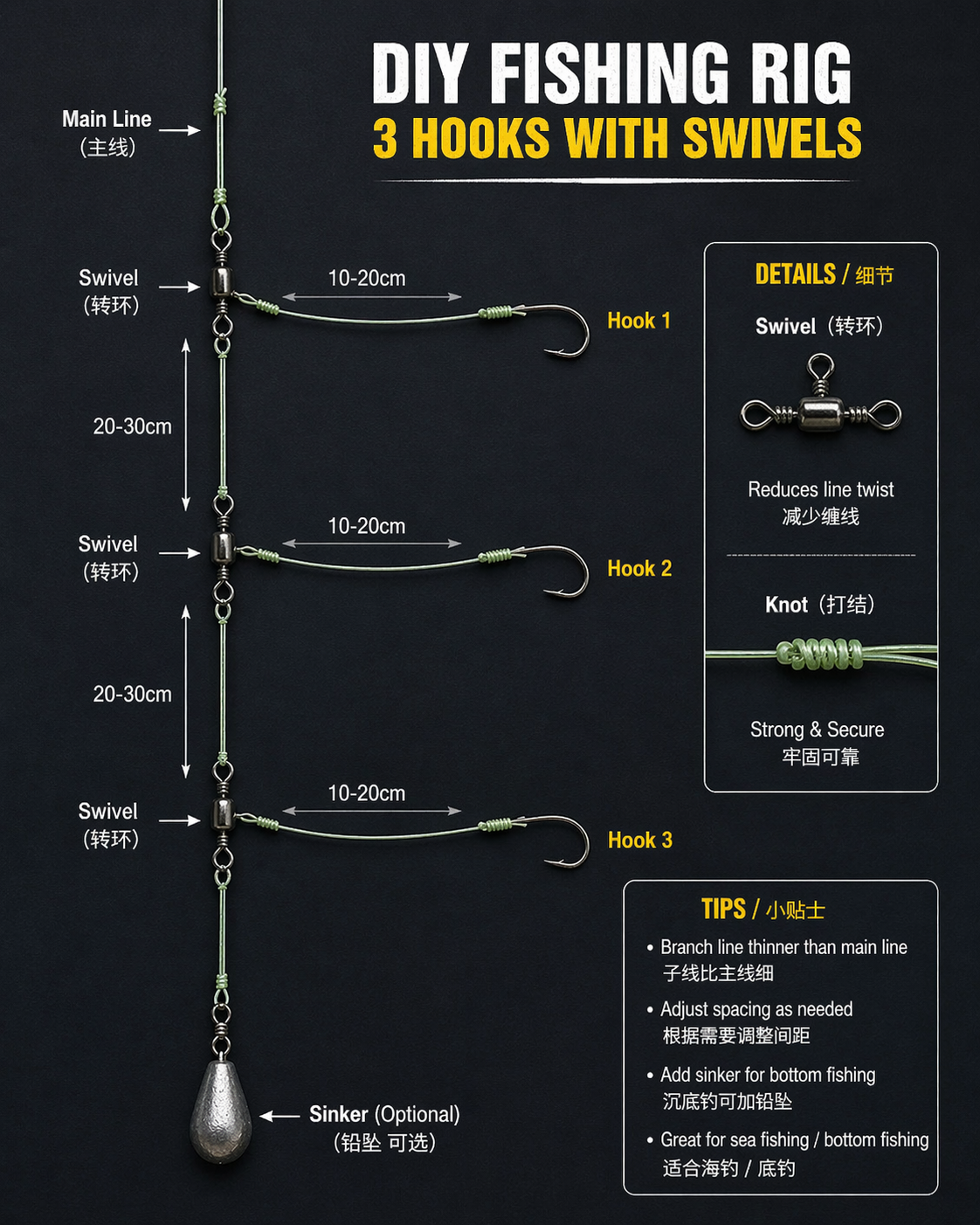
Structural Overview of the 3-Hook Swivel Rig
The 3-hook swivel rig is designed around a central main line, from which multiple branch lines extend via swivels. Each branch line is equipped with an individual hook, while a sinker may be attached at the terminal end depending on fishing conditions.
This configuration serves several functional purposes:
- It distributes bait across multiple points in the water column
- It reduces mechanical interference between lines
- It enhances adaptability across different fishing environments
From a technical standpoint, the inclusion of swivels allows rotational flexibility, which significantly reduces torsion buildup and line entanglement—two common issues in conventional rigs.
Performance Advantages in Practical Applications
Improved Bait Presentation
A multi-hook system increases spatial coverage, allowing bait to move more naturally with water currents. This aligns with widely recognized fishing principles: natural presentation tends to produce higher strike rates.
Reduced Line Twist and Tangle
Swivels act as mechanical buffers, absorbing rotational forces generated during casting and retrieval. This contributes to a more stable rig, particularly in dynamic water conditions.
Enhanced Strike Probability
By increasing the number of active hooks, the rig statistically improves the likelihood of successful hook engagement, especially in areas with dispersed fish activity.
Versatility Across Fishing Environments
The rig is adaptable to both freshwater and saltwater applications, making it suitable for targeting species such as carp, bass, and various coastal fish.
The Role of Hook Design in Rig Efficiency
While rig structure is important, hook performance remains a critical determinant of overall success. Suboptimal hooks can compromise even the most well-designed setups.
Key attributes of high-quality fishing hooks include:
- Consistent sharpness for effective penetration
- Structural strength to withstand tension and prevent deformation
- Surface treatment for corrosion resistance in diverse environments
In this context, material selection and finishing processes are particularly relevant for maintaining long-term performance.
A detailed range of professionally manufactured options can be reviewed here:
https://www.xsikes.com/product-category/fishing-hook/
Material and Design Considerations
Among available hook types, barbed and grooved designs are frequently preferred for their functional advantages. Barbs assist in securing the catch once penetration occurs, while grooved shanks improve bait retention during casting and underwater movement.
Surface treatments such as plating further enhance durability by providing resistance to oxidation and wear, especially in saltwater conditions.
An example of such a configuration is available for reference:
Heavy Duty Barbed Fishing Hook
This type of hook integrates structural strength with practical usability, supporting consistent performance across varied fishing scenarios.
Implications for Wholesale and Supply
For distributors and retailers, the selection of fishing hooks extends beyond performance alone. Consistency, scalability, and supply reliability are equally critical.
From a procurement perspective, standardized manufacturing processes and stable quality control contribute to:
- Reduced return rates
- Improved customer satisfaction
- Stronger brand positioning in competitive markets
Suppliers offering a broad product range with consistent specifications are better positioned to support long-term business growth.
Conclusion
The transition from traditional rigs to optimized multi-hook swivel systems reflects a broader trend toward efficiency-driven angling practices. By combining a structurally sound rig with well-engineered fishing hooks, users can achieve measurable improvements in both operational ease and catch success.
For wholesalers and professional buyers, careful attention to hook design, material quality, and supplier reliability remains essential in meeting market expectations.
Further Exploration
For a comprehensive overview of available models and specifications, please refer to:
https://www.xsikes.com/product-category/fishing-hook/
Additional product details and technical features can be found here:
https://www.xsikes.com/products/gold-plated-barbed-grooved-iron-hook/